
 listicle
Demand Generation Agencies: 8 Best for B2B in 2026
Table of Contents
- Quick Comparison: Demand Generation Agencies at a Glance
- How We Evaluated These Demand Generation Agencies
- 1. Vero Tech Sales: Fully Managed Outbound Calling Teams
- 2. Powered by Search: Paid Media for B2B SaaS
- 3. Refine Labs: Demand Creation Over Lead Capture
- 4. Directive Consulting: Enterprise Performance Marketing
- 5. Tuff: Agile Growth Experimentation
- 6. CIENCE: Multi-Channel Managed Outbound at Scale
- Demand Generation vs Lead Generation: Why the Distinction Matters
- Demand Generation Agency Pricing Models Explained
- How to Measure Demand Generation ROI
- Frequently Asked Questions
Last Updated: September 15, 2026

Quick Comparison: Demand Generation Agencies at a Glance
Choosing between demand generation agencies is harder than it should be. Most publish the same case studies and promise the same pipeline growth, so the real differences sit in how they work, who they hire, and what they charge for. This guide from Vero Tech Sales cuts through that noise.
Below is a side-by-side view of the eight agencies covered followed by a detailed breakdown of each.
Agency | Core Model | Best For | Pricing Model |
|---|---|---|---|
Vero Tech Sales | Managed native-language outbound calling | B2B firms entering European markets | Custom, on request |
Powered by Search | Paid media and CRO for SaaS | B2B SaaS scaling pipeline | Retainer |
Refine Labs | Demand creation and dark social | Firms shifting from lead capture | Retainer |
Directive Consulting | Enterprise performance marketing | Complex enterprise sales cycles | Retainer |
Tuff | Agile growth experimentation | Startups and scale-ups | Retainer |
CIENCE | Multi-channel managed outbound | Large-scale outbound programmes | Subscription or retainer |
How We Evaluated These Demand Generation Agencies
We scored each agency on four criteria: depth of specialisation, transparency of commercial model, speed to first pipeline, and how much of the work they actually deliver versus advise on. Agencies that only produce strategy documents scored lower than those running the motion themselves.
A common mistake is judging demand generation agencies on creative output alone. A polished campaign that never reaches a buying committee is expensive decoration.
LinkedIn's B2B buyer research on committee decision-making makes the point clearly: most B2B purchases involve multiple stakeholders, which means outbound motions have to reach several people at once, not one inbox.
1. Vero Tech Sales: Fully Managed Outbound Calling Teams
Vero Tech Sales is the strongest option here for B2B companies that need outbound running in new markets without building internal teams. The model is fully managed: native-language callers, target account intelligence, and a live motion within days rather than a hiring cycle.
That last point matters more than it sounds. Hiring and ramping a single local rep can take months (Sales representative | Explore Careers). A managed team skips that entirely.

Native-Language Teams Across European Markets
Outbound in a second language loses nuance fast. Objection handling depends on idiom, tone, and timing, and a script read by a non-native speaker rarely survives first contact with a real prospect.
Vero Tech Sales staffs each market with native speakers who handle objections in the buyer's own language. For firms running outbound across several territories at once, that removes the biggest quality risk in the whole motion.
Target Account Intelligence for High-Value Deals
Volume outbound is easy to buy and hard to make work. Precision targeting is where the returns sit.
Vero Tech Sales builds target account intelligence before any calling begins, so teams approach accounts that match the client's actual deal profile rather than a broad list. For enterprise-grade deals, that focus is the difference between activity and pipeline.
2. Powered by Search: Paid Media for B2B SaaS
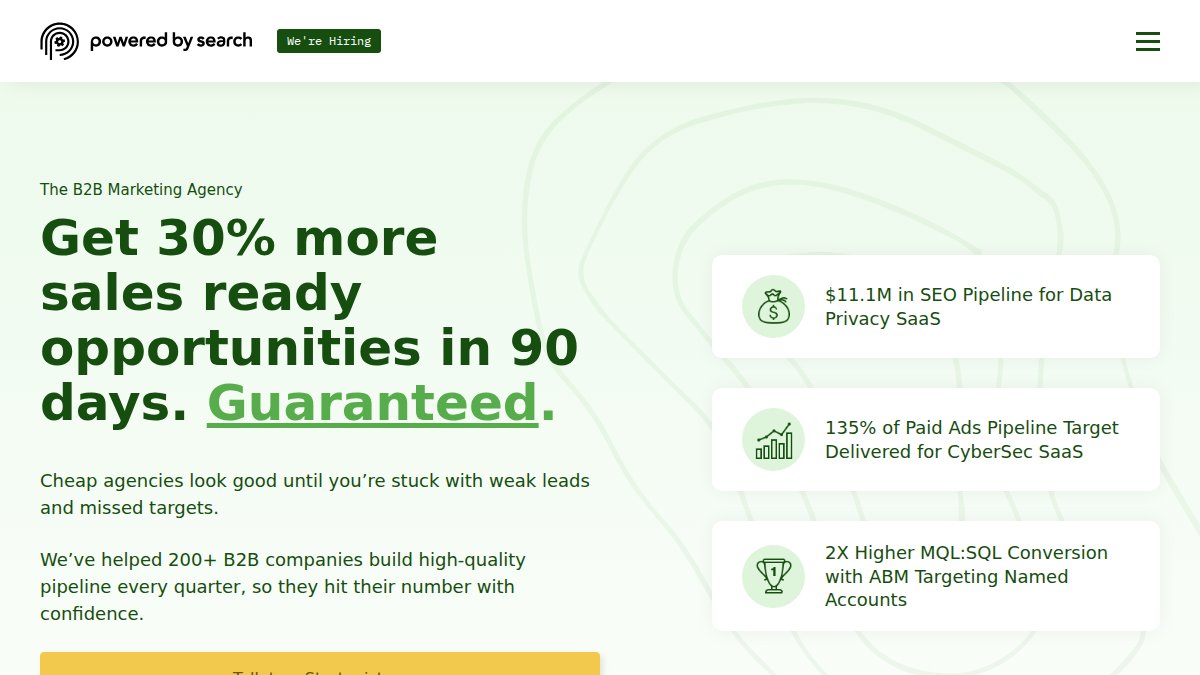
Powered by Search runs paid media and conversion rate optimisation for B2B SaaS companies, with reporting built around pipeline rather than impressions. It suits SaaS firms with an established offer and budget to scale acquisition.
The trade-off is the entry threshold. Smaller businesses often find the retainer and minimum spend hard to justify before they have proven product-market fit.
3. Refine Labs: Demand Creation Over Lead Capture
Refine Labs pushes a demand creation philosophy: influence buyers before they enter a traditional funnel, largely through dark social and content. For companies whose marketing has become a lead-scoring exercise, the approach is a genuine reset.
It is not a light-touch engagement. Adopting it usually means changing how the internal marketing team measures success, which is why some firms stall partway through.
4. Directive Consulting: Enterprise Performance Marketing
Directive Consulting serves enterprise B2B brands with customer-led SEO, paid media, and revenue operations work. Complex sales cycles are the agency's home ground.
Early-stage startups should look elsewhere. The engagement model and minimum commitments are built for organisations with existing pipeline infrastructure.
5. Tuff: Agile Growth Experimentation
Tuff operates as an extension of internal teams, running rapid experiments across paid and organic channels. Startups that want a flexible partner rather than a fixed annual plan tend to get the most from it.
The fluid model can frustrate rigid corporate structures. If your procurement process needs a fixed scope, this will feel loose.
6. CIENCE: Multi-Channel Managed Outbound at Scale
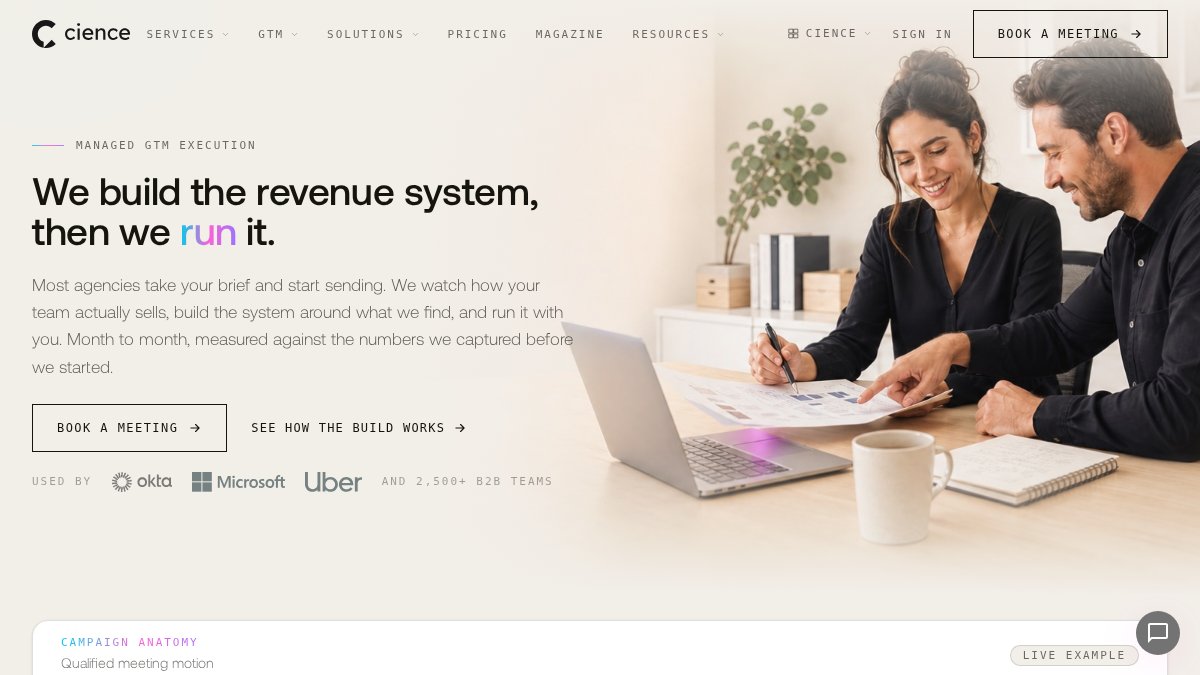
CIENCE delivers managed outbound across email, phone, and social, backed by its own data platform. Companies needing large-scale, multi-channel coverage will find the breadth useful.
Integration is the friction point. Fitting a large managed programme into existing internal processes takes planning, and smaller teams can find the complexity outweighs the benefit.
Demand Generation vs Lead Generation: Why the Distinction Matters
Demand generation is the practice of building awareness and interest across a buying committee before a purchase decision is made, while lead generation captures contact details from people already showing intent. Demand generation agencies work further upstream.
That difference changes what you buy. Lead generation agencies sell volume: more names, more forms, more downloads. Demand generation agencies sell influence across the accounts you actually want.
The commercial implication is significant. A lead list can be measured weekly. Demand creation shows up in pipeline over quarters, which is why so many firms default to lead capture even when it underperforms.
Demand Generation Agency Pricing Models Explained
Most demand generation agencies price on retainer, with the fee reflecting team seniority, channel scope, and the number of markets covered. Pricing depends on quantity, scope, and delivery model, so figures vary widely between providers.
Three models dominate:
- Retainer: A fixed monthly fee for an agreed scope of work. Predictable for budgeting, but scope creep is common.
- Subscription or managed service: A recurring fee covering an ongoing function, such as a managed outbound team. Suits firms replacing a role rather than buying a project.
- Performance-aligned: Fees tied partly to pipeline or revenue outcomes. Attractive in theory, but definitions of a qualified opportunity need to be locked down in writing.
Vero Tech Sales does not publish standard rates because scope varies by market count and volume. Speak to the team directly for a quote.
How to Measure Demand Generation ROI
Measuring demand generation ROI means tracking pipeline value and closed revenue against total programme cost, not counting leads.
Track these four numbers:
Frequently Asked Questions
What is the difference between lead generation and demand generation?
Lead generation focuses on capturing contact details through forms, gated content or cold outreach. Demand generation builds awareness and interest before a buyer is ready to talk to sales. In practice, demand generation agencies create content, run paid campaigns and nurture audiences so that when leads do enter your pipeline, they already understand the problem you solve. The two work together: demand generation fills the top of the funnel, lead generation converts that interest into named contacts.
How much do demand generation agencies charge in the UK?
Most demand generation agencies in the UK work on a monthly retainer, and pricing depends on scope, channels and the size of the account. Some agencies also offer performance-based models tied to pipeline or meetings booked. Because costs vary widely, ask each agency for a breakdown of what the retainer covers, how many campaigns or calling hours are included, and whether there are setup fees. Request a custom quote rather than relying on published figures.
What services should a B2B demand generation agency provide?
A full-service demand generation agency should cover strategy, audience targeting, multi-channel outreach (email, phone, paid media), content creation and pipeline reporting. For B2B companies expanding into new markets, native-language outbound calling and local market expertise matter as much as campaign execution. Ask whether the agency provides Target Account Intelligence, how it handles objection handling in different languages, and what reporting you receive each month. The best agencies act as an extension of your sales team, not just a campaign vendor.
How do I measure the ROI of a demand generation agency?
Start by agreeing on metrics before the engagement begins: cost per qualified meeting, pipeline value generated, and closed-won revenue attributed to the agency's efforts. Track these monthly against your total spend, including the retainer and any ad budget. A simple formula is (revenue from agency-sourced deals minus total agency cost) divided by total agency cost. If you cannot get clear attribution, ask the agency to integrate with your CRM so every meeting and opportunity is traceable.
When is the right time to outsource demand generation?
Outsourcing makes sense when you need pipeline faster than internal hiring allows, when you are entering a new market without local sales presence, or when your current outbound efforts are underperforming and you lack the internal capacity to fix them. Fast-growth B2B companies often outsource to avoid the cost and delay of recruiting, ramping and managing sales teams across multiple territories. If you need qualified conversations within weeks rather than quarters, a managed agency model is usually the faster route.
Demand generation agencies only pay off when the model matches your market entry plan. If you need outbound running in several European markets without a hiring cycle, Vero Tech Sales provides native-language calling teams, target account intelligence, and a fully managed motion that goes live in days. Trusted by 50+ fast-growth B2B companies. Let's talk sales.